Local SEO for a world where buyers ask an assistant first
Local SEO is the work of getting a business found by customers in its area. For any business that serves a physical area - service businesses, clinics, trades, restaurants, retail - this is consistently the highest-return form of SEO, because the competitive field is small and the intent is high. The customer searching “best family dentist near [neighborhood]” or “plumber open now” is ready to call.
What is changing is where that question gets asked. Buyers increasingly skip the map pack entirely and ask ChatGPT, Google AI Overviews, or another assistant - which returns a short list of businesses directly, often with a single strong recommendation. A local business invisible in that answer loses the customer before they ever see the map. AEO Goal is built to measure both surfaces together and close the gap on both.
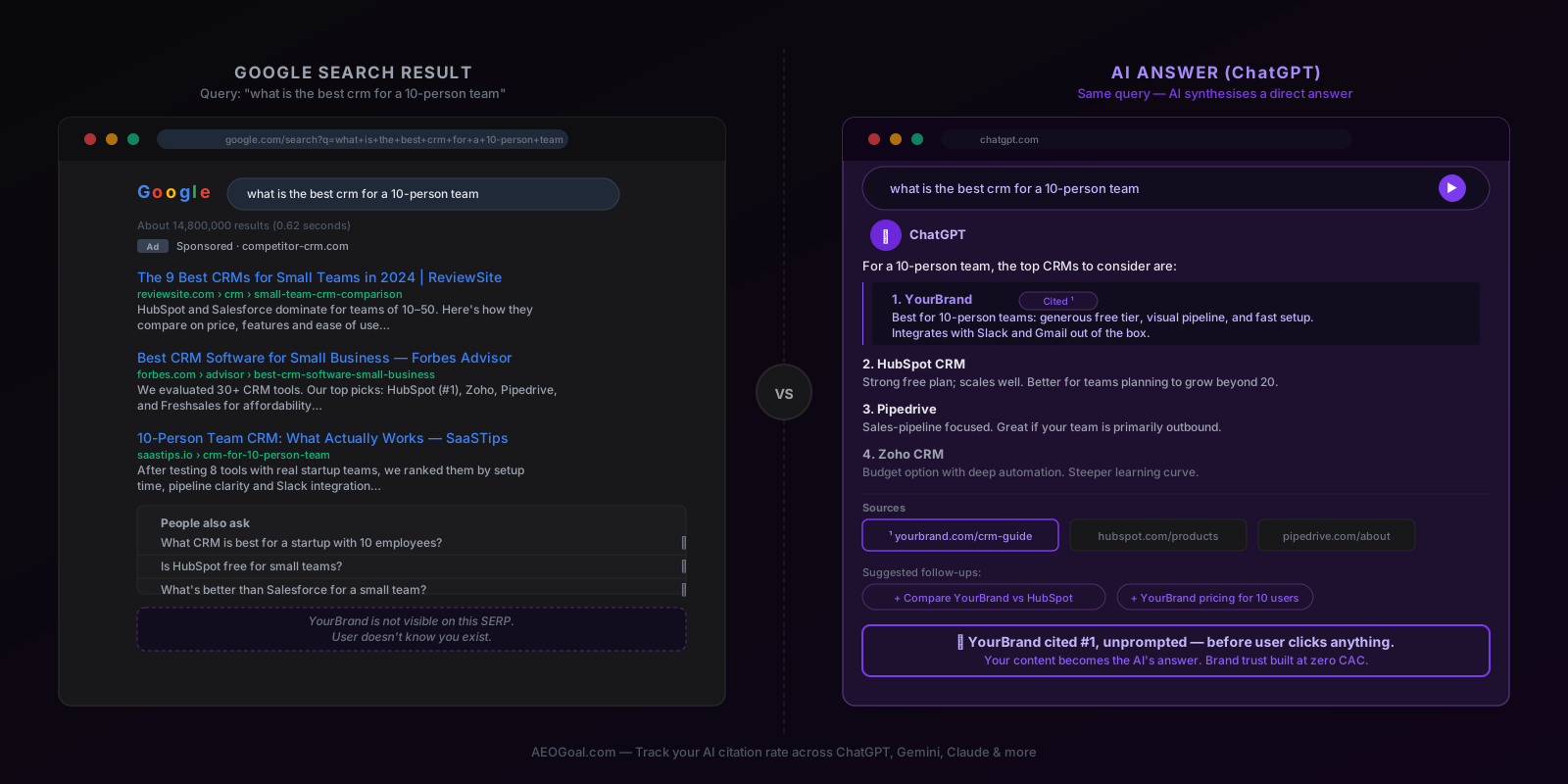
The signals that move local visibility
The same durable foundations power both local search rankings and AI assistant recommendations:
- A complete, accurate business profile. Correct name, address, hours, categories, and photos.
- Consistent business information across directories and the web, so systems trust the details.
- Genuine reviews in enough volume and recency to signal a real, active business.
- Locally relevant pages that give search engines and AI systems something substantive to rank and cite.
AI assistants do not have a special local database. When someone asks for a nearby recommendation, the model reasons from the same profile, review, and page signals that power local search, plus the pages it can actually access and cite. A business with accurate profiles, real reviews, and substantive service pages is both more rankable and more recommendable.
That overlap means the fundamentals done well pay off twice - and AEO Goal’s job is to show you precisely where those fundamentals are weak enough to be costing you the answer.
Track both surfaces in one place
AEO Goal tracks how the business ranks for its priority local searches and whether AI engines recommend it when someone asks a local question - on one dashboard, so you can see them move together.
When you fix a thin service page or clarify your business information, you want to see the effect on both your local rankings and on whether assistants start recommending you. Seeing both on one trend line means you know within a cycle or two whether the work paid off, and you can redirect effort if it did not.
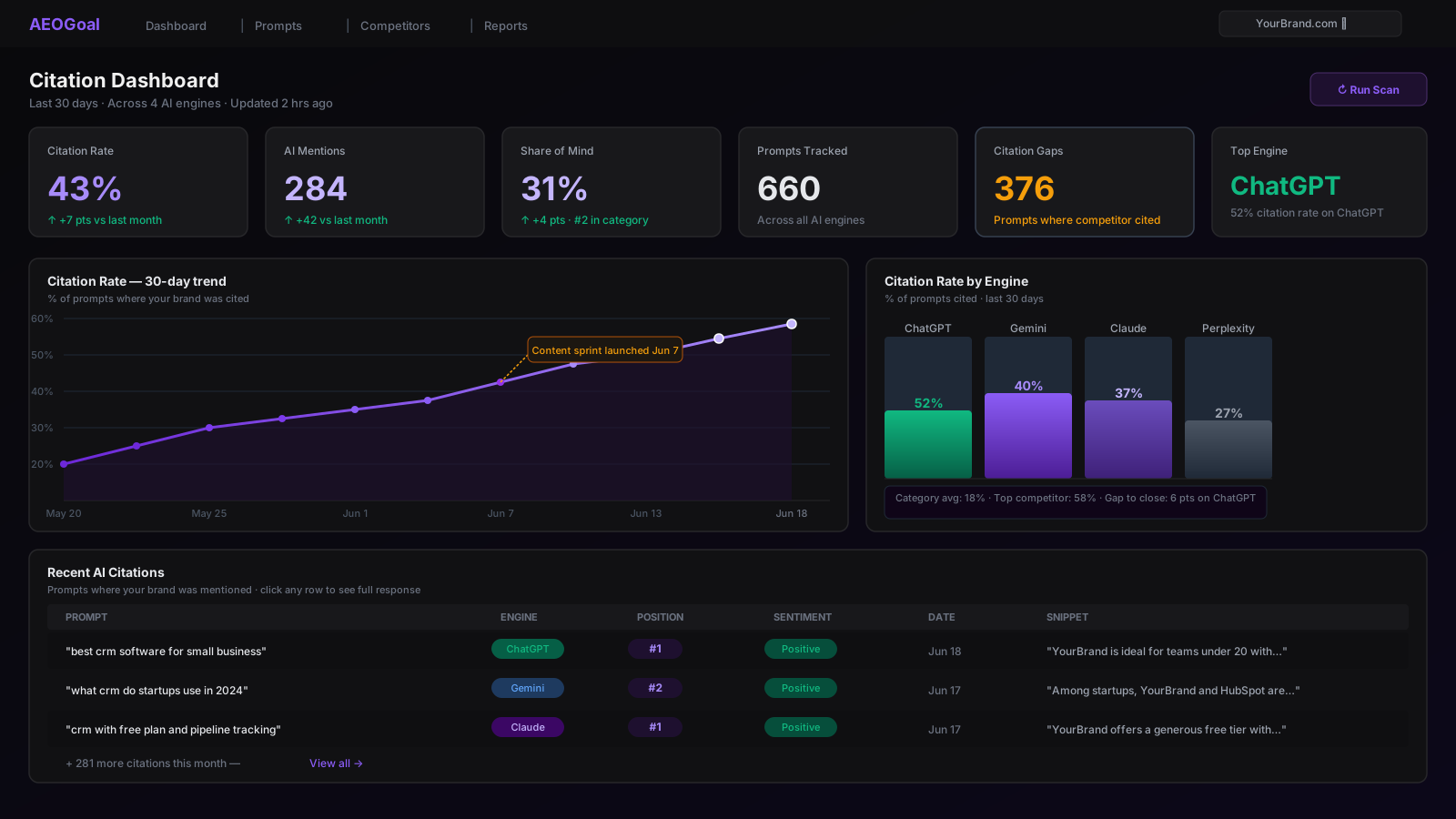
Each finding ties to a specific fix. A thin service page that an assistant cannot cite gets a content brief. A crawl issue hiding a location page gets flagged with a resolution. On the next scheduled run, AEO Goal re-checks whether the recommendation improved. That measure-fix-remeasure loop is what turns a one-time diagnostic into a local visibility program.
Because the loop runs on a schedule, local visibility stops being something you check once and forget. Markets shift, a competitor opens nearby, or an assistant updates how it answers - and the monitoring catches it, re-opens the gap, and points at the fix before you lose ground you did not know you were losing.
A worked example
A two-location dental practice ranks well in the map pack but never appears when someone asks ChatGPT “what is a good family dentist near [neighborhood].” AEO Goal surfaces that gap, shows why - one thin page covers all services with no clear, citable content for family dentistry in that specific neighborhood - and generates a brief for a substantive, locally specific page the model can actually draw from. On the next run, it shows whether the assistant started including the practice. One fix, both surfaces checked, in one place.
What you can finally answer
- Do we show up for our priority “near me” searches, and how is that trending?
- When someone asks an AI assistant for a local recommendation, does it name us or a competitor?
- Which local pages are too thin for a model to cite, and which should we strengthen first?
- Did our profile, review, and content work actually move local visibility across both surfaces?
Who it is for
- Local service businesses - trades, clinics, restaurants, retail - that live or die on near-me discovery
- Multi-location businesses that need per-location visibility across both maps and AI recommendations
- Local marketers and agencies who want one trend line for rankings and AI recommendations per client
Ready to see where you stand? Run a free AI visibility scan to check whether AI assistants can currently find and cite your local pages - no signup required. Or read AEO versus traditional SEO to understand the AI answer surface in full.